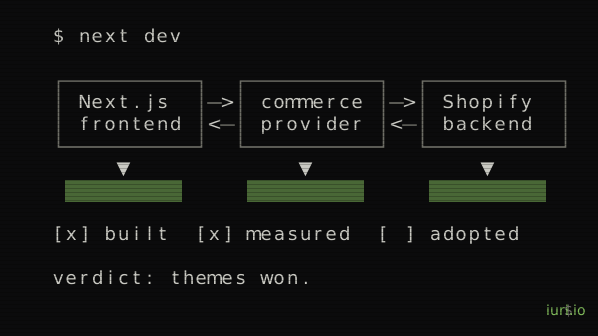
Before headless commerce was a settled category, my team ran an internal initiative to find out whether it was worth adopting. This was early, and most of the tooling was not finished yet.
What we built
We built on Next.js Commerce, Vercel’s open-source starter. It was one of the few off-the-shelf ways to connect a Next.js frontend to a commerce backend at the time. Shopify’s own Hydrogen was not the pick back then. Today it probably would be.
Why it did not go further
Standard Shopify themes won. They were easier to maintain, the app ecosystem already worked, and they did not need the extra plumbing headless asked for.
What is different now
The gap back then was not the frontend framework. It was the layer underneath. No CMS was built for this kind of setup, so content was either custom or unproven. That part is solved now. You can pair Shopify with a headless CMS like Sanity and have it working in an afternoon.
I do not know how relevant Next.js Commerce still is, honestly. I have not gone back to check.
This was also my first time working with no ticket and no deadline.